



















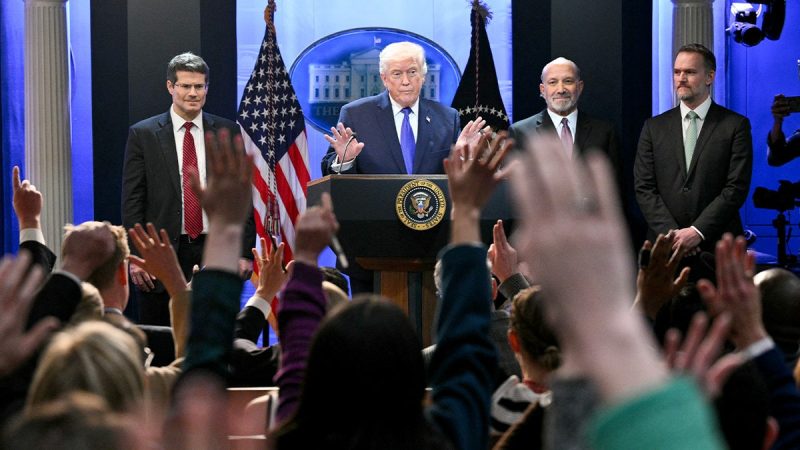
President Donald Trump has lost his tariff case in the Supreme Court. However, with careful and prudent use of the tariff powers he does have, he can turn this into a win for his policies and for America.
The Supreme Court has just ruled in Learning Services v. Trump that the International Emergency Economic Powers Act (IEEPA) does not authorize the president to impose tariffs. While the act unquestionably gives him the power to regulate imports in the event of unusual and extraordinary emergencies, the dispute was whether tariffs – a kind of tax – are legally and constitutionally ‘regulation.’
While there were reasonable arguments on both sides, six of the nine justices ruled they are not, and that the IEEPA does not empower the president to impose tariffs. What are the likely economic consequences of this ruling, and what should it imply for future Trump trade policy?
First, note that as economic policy, tariffs are a bad idea. International trade raises incomes and promotes economic growth in every country that trades. Trade is mutually beneficial, win-win for all trading parties. It is a popular myth that trade destroyed American manufacturing. American manufacturing has steadily increased since 1970, more than doubling, as shown by data collected by the Federal Reserve Bank of St. Louis.
On the other hand, roughly 90% of the costs of the ‘liberation day’ tariffs have been borne by American businesses and consumers, as shown in analysis by economists at the New York Federal Reserve. The American economy has had solid growth and low unemployment under Trump, but this is owing to his excellent energy and deregulation policies, which have reduced regulatory burdens. Tariff costs are another burden on the economy. Removing this drag should further encourage economic growth and employment.
It is also a popular myth that a trade deficit is a loss for a country. The trade deficit, or current account, is balanced the capital and financial accounts, that is, foreigners investing in America. There are two reasons why foreign investment flows into America. One is that America’s security and dynamism make it an attractive place to invest, a good thing. The other is the Federal government’s growing appetite for borrowing to cover its burgeoning deficits, a bad thing. Tariffs and trade restrictions make America’s economy less dynamic and do nothing to curb the government’s fiscal irresponsibility. There is no good economic argument for tariffs.
However, for foreign policy and national security purposes, tariffs can have an important role. Numerous other laws authorize the president to impose such tariffs. For example, the Trade Act of 1974, Section 122 (under which Trump has now imposed 10% tariffs) authorizes tariffs in the event of severe balance-of-payments deficits. The Trade Expansion Act of 1962, Section 232, authorizes tariffs on goods for national security purposes.
Numerous other laws authorize the president to impose tariffs. However, all of these include various reasonable conditions and limits. For example, if the president imposes a national security tariff, Section 232 gives the administration 270 days to develop a study justifying the tariff. Trump still holds broad power to impose tariffs, but now it is more constrained and requires transparent reasons for any particular exercise of this power.
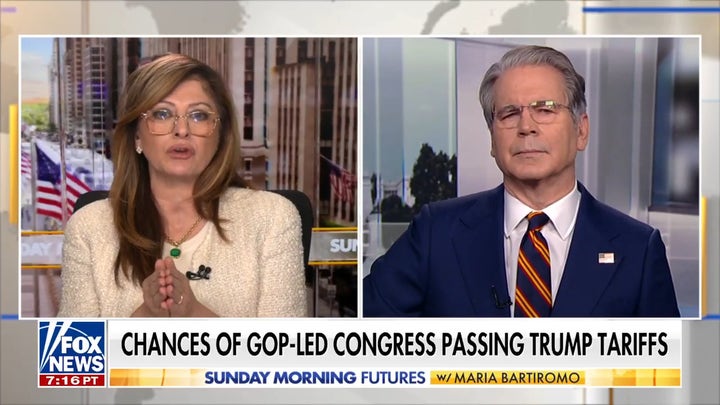
While this constrains Trump somewhat, he can turn this into a win for his presidency. Tariff power can be useful as a foreign policy tool, and by using a more nuanced and targeted approach to tariff policy, he can accomplish a lot of good for the American economy.
For example, the European Union is attempting to impose its ESG (Environmental, Social, and Governance) standards on American firms doing business in Europe, via the EU’s Corporate Due Diligence and Sustainability Mandates. EU mandates would apply to all of a firm’s activities everywhere, not just those in Europe.
Similarly, the EU has attempted to impose its Digital Services Act on American media platforms such as X (formerly Twitter) and Meta. This would require firms to monitor and censor free speech, despite America’s First Amendment protections. Targeted tariffs could be a very useful tool for punching back at this, protecting free commerce and defending American firms from such attacks. This would have the effect of strengthening America’s economy and position in the world.
President Trump has lost a round in the Supreme Court and his ability to impose tariffs is constrained. But with judicious use of the powers he retains, he can turn this into an opportunity to make America stronger and his presidency a greater success.
Related Article